

What is an ATV Bale Trailer
An ATV bale trailer is a piece of equipment designed to be towed by an all-terrain vehicle (ATV) or similar and used for transporting either round or Heston bales of hay, straw and haylage safely around the fields. These trailers are commonly used on farms and rural properties to make the process of moving the bales quick and efficient.
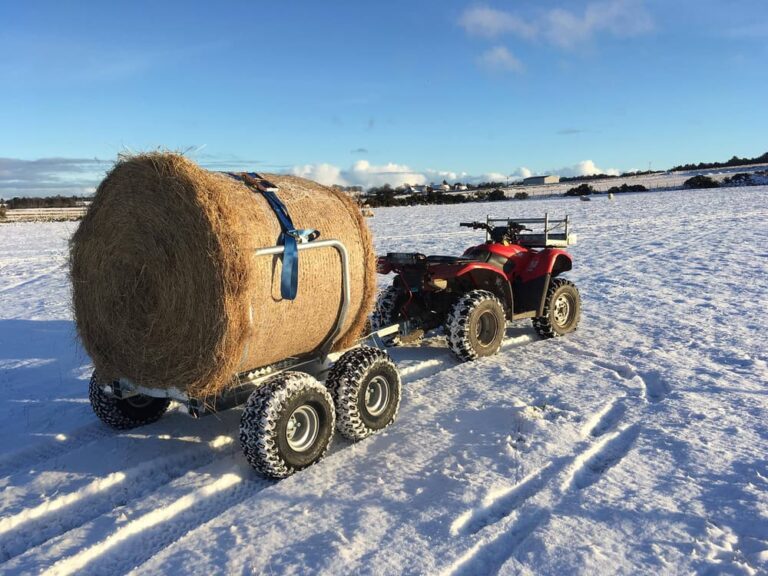
ATV bale trailers typically feature a sturdy frame mounted onto low-ground impact wheels and tyres, with bale spikes, cradle arms, or support poles securely holding the bales in place whilst being transported. Model-dependent, they are fitted with either manual, electric, or hydraulic winches for loading and unloading the bales.
These trailers are well-suited for smaller-scale farming operations such as smallholders, equestrians, and farmers where tractors may not be practical for bale transportation when the terrain may get damaged through water-logged fields or undulating making it dangerous with a tractor! They allow ATV and UTV owners to efficiently handle bales for feeding livestock in the fields when needed.
ATV Bale Trailer - Single or Tandem Axle?
ATV bale trailers typically come with either a single or twin-axle setup. The twin axle is the “walking beam” type which follows the contours of the terrain meaning it can cope with rough, undulating field terrain better, also, it is easier to tow and has less strain on the transmission of the ATV or UTV!
Single Axle:
A single axle is suitable for slightly lighter loads and relatively flat terrain. It offers better maneuverability but may not handle heavy loads as well as a tandem axle.
Tandem Axle:
A tandem axle setup provides better stability and weight distribution, making it more suitable for carrying heavier loads (up to 900 Kg) or navigating uneven terrain. It can also reduce the risk of trailer tipping.
ATV Bale Trailer Wheel Size:
The size of the wheels can also matter. Larger wheels can handle rougher terrain more effectively, offer better ground clearance, and provide a smoother ride with less damage to your horse paddocks and fields. However, they may also increase the overall height of the trailer, making it less stable.
How to Store and Handle Round and Heston Bales
Storing and handling single round or Heston bales for smallholders or equestrian use requires careful attention to ensure the hay, straw or haylage remains of good quality and is easily accessible for feeding. Here is some general information on how to store and handle these bales effectively:
Storing Single Round Bales:
Location: Choose a dry, well-drained location for storing round bales. Elevate them off the ground using pallets, blocks/bricks, or specialized bale racks to prevent moisture absorption from the ground.
Cover: Protect the round bales from weather elements by covering them with tarps or purpose-built bale covers, typically wrapped bales at the point of harvesting. This prevents rain and snow from causing mould and spoilage.
Spacing: Leave some space between bales to allow for air circulation, reducing the risk of mould growth. Stacking bales too closely can trap moisture.
Positioning: Place the bales on their “rolling edge” to minimize contact with the ground and reduce the risk of moisture wicking up into the bale.
Rodent Control: Implement measures to deter rodents from nesting in or chewing on the bales, such as using rodent-proof storage containers or strategically placed traps.
Handling Single Round Bales:
Equipment: Round bales are typically heavy ranging between 300 Kg to 900 Kg of haylage, they are best handled using appropriate machinery, typically one of our ATV bale trailers.
Safety: Exercise caution when handling round bales, as they can be unstable and pose a risk of injury if they roll or fall. Use proper lifting and securing techniques.
Feeding: To feed horses or other livestock, consider using a bale feeder designed for round bales. These reduce wastage and help maintain the bale’s integrity.
Storing Single Heston Bales:
Location: Store Heston bales in a dry, well-ventilated barn or shed. Elevate them off the ground to prevent moisture absorption.
Stacking: Stack the Heston bales neatly to maximize space and prevent shifting. Use sturdy pallets or racks for support if needed.
Cover: If storing Heston bales outside, use waterproof covers or tarps to protect them from rain and weather.
Rodent Control: Implement measures to keep rodents away from your stored Heston bales, as rodents can damage and contaminate the hay.
Handling Single Heston Bales:
Manual Handling: Heston bales are handled differently from round bales. Our Fresh ATV bale trailer is available with two spikes, therefore enabling the handling of Heston bales.
Feeding: For equestrian use, consider using hay nets or racks to feed horses from Heston bales. This reduces waste and keeps the hay clean.
Quality Check: Regularly inspect stored Heston bales for signs of mould, moisture, or rodent damage. Remove any affected bales to prevent contamination of the entire storage area.
By following these guidelines for storage and handling, smallholders and equestrian enthusiasts can ensure that their hay and straw bales remain in good condition and provide quality feed for their animals. Proper storage and handling practices also help to minimize waste and maintain the nutritional value of the forage.

